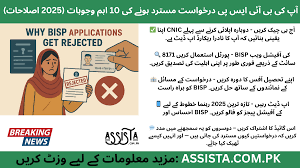

The Ehsaas Program is one of Pakistan’s largest financial assistance initiatives, designed to support low-income families. However, many applicants face rejection without clearly understanding why. If your application has been declined, don’t worry—this guide explains the real reasons for rejection and how you can fix them.
What Is the Ehsaas Program?
The Ehsaas Program provides financial aid to deserving families through initiatives like 8171 CNIC verification and cash support schemes. Eligibility is determined through strict criteria, ensuring only genuinely needy individuals receive benefits.
Top Reasons Why Applications Get Rejected
Understanding the reasons behind rejection can help you avoid mistakes and reapply successfully.
1. Incorrect CNIC Information
One of the most common reasons is entering the wrong CNIC number. Even a small typing error can result in instant rejection.
Solution:
Double-check your CNIC before submitting. Make sure all digits are correct.
2. Not Meeting Eligibility Criteria
The program is designed for low-income households. If your financial profile doesn’t meet the criteria, your application may be rejected.
Common issues include:
- High monthly income
- Ownership of valuable assets
- Government job holder in family
Solution:
Ensure you truly qualify before applying.
3. Incomplete Family Data
Your application may be rejected if your family information is incomplete or outdated in the government database.
Solution:
Update your family record through NADRA before applying again.
4. Duplicate Applications
Submitting multiple applications using the same CNIC or family details can lead to rejection.
Solution:
Apply only once and wait for the official response.
5. SIM Not Registered on Your CNIC
If the mobile number used for registration is not linked to your CNIC, verification may fail.
Solution:
Use a SIM that is registered in your name.
6. Previous Ineligibility Record
If you were previously marked as ineligible due to financial status or verification issues, your application may still be flagged.
Solution:
Request a re-survey or update your information through official channels.
7. Data Mismatch with Government Records
Your details are cross-checked with multiple government databases. Any mismatch can lead to rejection.
Examples:
- Different name spelling
- Incorrect address
- Family member discrepancies
Solution:
Ensure all your records are consistent across documents.
8. Traveling Abroad Frequently
If your travel history shows frequent international trips, the system may consider you financially stable.
Solution:
This is difficult to change, but ensure other data reflects your true financial condition.
9. Ownership of Property or Vehicle
Owning land, a car, or a business can make you ineligible.
Solution:
Only genuinely deserving individuals should apply.
10. Survey Not Completed
Many applicants are rejected because they haven’t completed the NSER (National Socio-Economic Registry) survey.
Solution:
Visit the nearest Ehsaas center and complete your survey.
How to Check Your Application Status
You can easily check your status through:
- SMS service (send CNIC to 8171)
- Official Ehsaas portal
Make sure your CNIC is valid and active.
What To Do After Rejection?
If your application is rejected, follow these steps:
- Identify the reason for rejection
- Correct your information
- Update your records with NADRA
- Reapply through the official method
Pro Tips to Avoid Rejection
- Always use accurate CNIC details
- Keep your data updated
- Avoid multiple submissions
- Complete the NSER survey
- Use your own registered SIM
Final Thoughts
Getting rejected from the Ehsaas Program can be frustrating, but in most cases, it’s due to fixable errors or missing information. By understanding the reasons and correcting them, you can significantly increase your chances of approval.
If you’re eligible, stay patient and follow the correct process—your financial support could be just one step away.